
Straight Away: Make the Room Safe
- Water and electrics do not mix. If water is running near a ceiling light, socket or switch, turn that circuit off at the consumer unit and leave it off until an electrician has checked it.
- Watch the ceiling. A ceiling that bulges, sags or has a growing brown patch may be holding a lot of water. Keep children, pets and yourself out from underneath it.
- Stay on the ground. Climbing a ladder or going onto a roof in wind and rain is how people get badly hurt. Nothing on the roof is worth that risk.
- Take care in the loft. Only go up if there are boards to walk on and a working light. One foot between the joists can go straight through the ceiling below.
Catch the Water and Protect Your Things
- Stand a bucket, washing up bowl or storage box under every drip. A folded towel in the bottom stops water splashing out.
- Move sofas, beds, electrical items and anything precious out of the way, and roll back rugs before they soak through.
- Lay old towels along skirting boards and empty the containers before they overflow.
- In a boarded loft, put a container under any drip you can see and lift stored boxes off damp insulation.
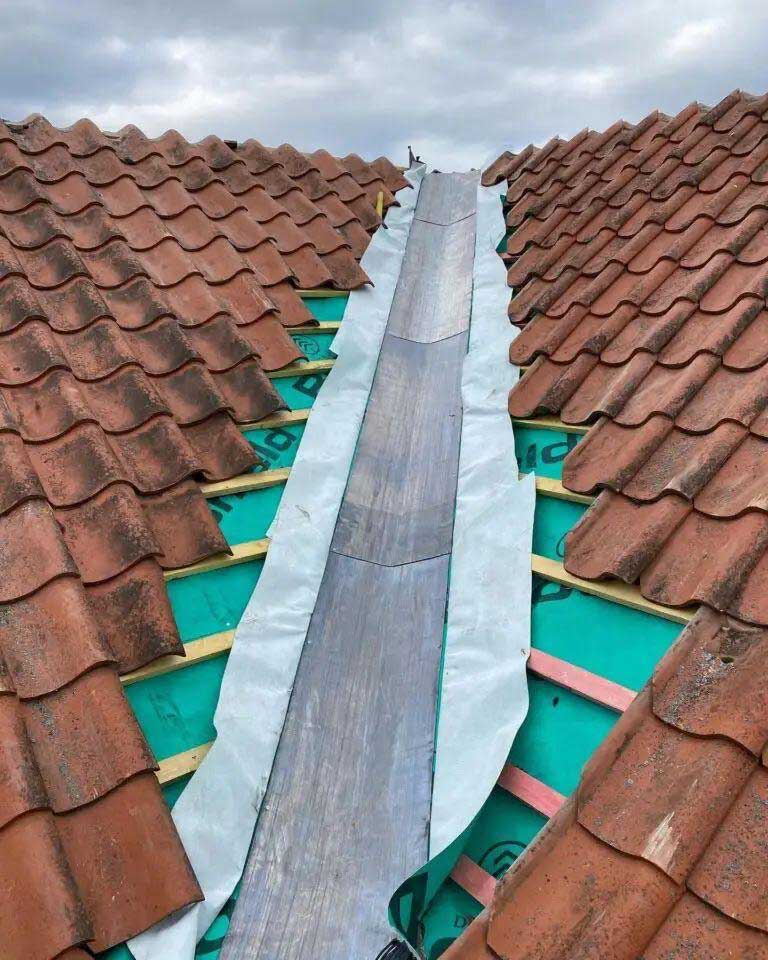
Where Rain Gets In on West Sussex Roofs
Along the coast from Bognor Regis to Worthing, heavy rain often arrives on a strong south westerly wind. Rain driven sideways finds gaps that stay dry in a gentle shower, which is why so many leaks only show up in a gale. The usual culprits are:
- Valleys, the channels where two roof slopes meet, which carry a lot of water in a short space.
- Slipped, cracked or missing tiles and slates, often after a night of high wind.
- Ridge and hip tiles where the mortar bedding has cracked and washed out.
- Flat roofs on extensions, garages and dormers where the covering has split or lifted at an edge.
- Blocked gutters that fill with leaves in autumn and spill water back behind the fascia.
Chimneys and Walls: Check the Flashing
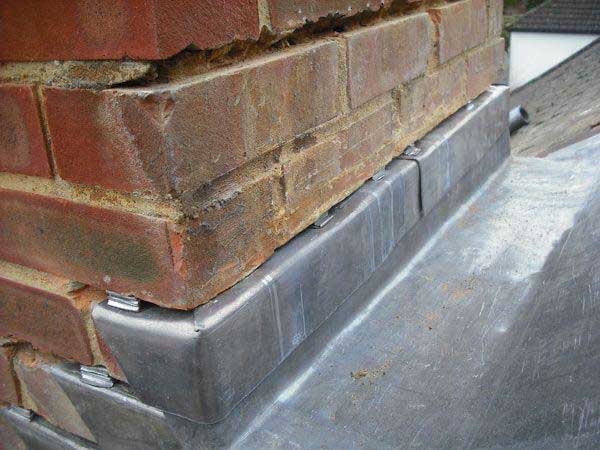
Where a roof meets a chimney stack or the wall of a house, the joint is sealed with lead flashing. Over time the lead can crack, slip or pull out of the brickwork, and water then runs down inside the wall. A damp patch on a chimney breast or high on an outside wall, rather than in the middle of a ceiling, often points here.
We repair and replace flashing as part of our chimney and guttering work, and our roof repairs page covers the wider range of repairs we carry out.
Is It Really a Leak?
Not every damp patch comes from the roof. Condensation forms when warm, moist air from the house rises into a cold loft and settles on the underside of the roof, especially in cold, still weather. Bathroom fans that vent into the loft instead of outside make it worse.
A simple test: if the damp appears during or just after rain, the roof is the likely cause. If it appears on cold, dry mornings and the timbers look wet all over rather than in one spot, ventilation is more likely to be the problem. Either way, we can inspect the roof and tell you which it is.
What to Tell Us When You Call
A few details help us work out what is wrong before we arrive:
- Which room the water is showing in, and whether it is near a chimney, a wall or the middle of the ceiling
- What the roof is made of: tiles, slate, or a flat roof
- When it started, and whether it leaks in every shower or only in wind
- Anything you can see from the garden or the street, such as a slipped tile or an overflowing gutter
Before you tidy up, take a few photos of the stain, the drips and anything you spotted outside, and note the date and the weather. Photos help us narrow down the cause, and your insurer may ask for them. Policies differ, so check yours and ask your insurer what they need.
Questions About Roof Leaks
Can you come out to a leak at night or at the weekend?
Yes. Our emergency service is available 24/7 for urgent roof repairs. Call 01903 442348 or 07394 150273 and tell us what you can see.
Why does my roof only leak when it is windy?
Strong wind pushes rain sideways and upwards, so water reaches gaps that stay dry in ordinary rain: under the edges of tiles, behind lead flashing and through cracked mortar on the ridge. A leak that only appears in a gale usually points to one of those places on the side of the roof facing the wind.
Can I put a tarpaulin over the roof myself?
Please do not. A wet roof is slippery, a tarpaulin catches the wind like a sail, and ladders are unsafe in a storm. Catch the water indoors and leave the roof to a roofer with the right access equipment.
Will my home insurance cover a leaking roof?
It depends on your policy and on what caused the leak. Many policies treat sudden storm damage differently from gradual wear. Read your policy, take photos before anything is moved, and ask your insurer what they need from you and from the roofer.
Keeping the Next Leak Away
- Have gutters cleared once the autumn leaves are down, and again in spring if trees overhang the house.
- After a storm, look at each slope from the ground for gaps, slipped tiles or lead that has lifted.
- Deal with small faults while they are small. A handful of tiles costs far less than wet timbers, damp insulation and a new ceiling.
Leaking Roof in Worthing, Chichester or Nearby?
We repair roofs across Worthing, Bognor Regis, Chichester, Storrington, Pulborough, Billingshurst and Horsham. For an urgent leak, see our emergency roofer page or call 01903 442348. For anything else, send us a message.